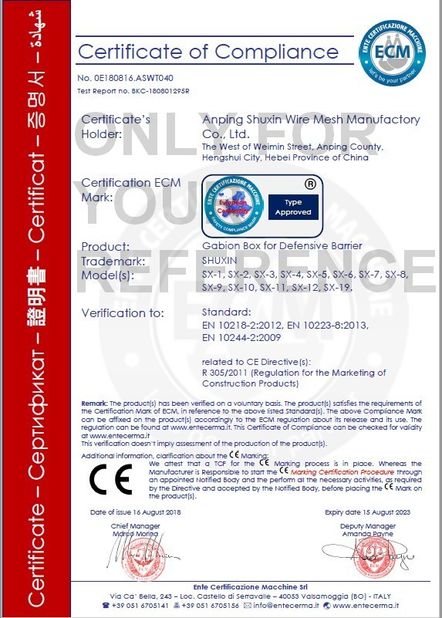
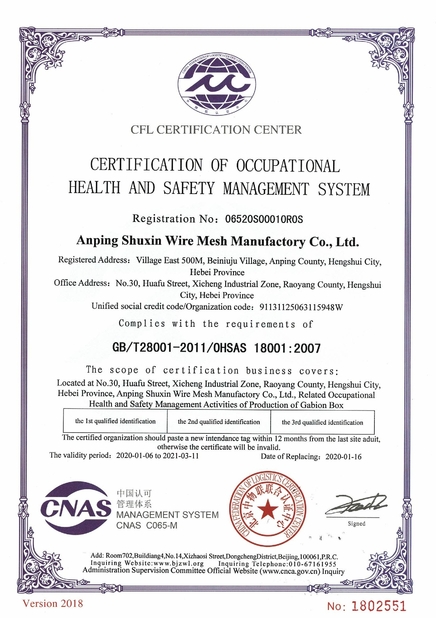
Protección de perímetro resistente de ingeniería: el plan técnico y la dinámica de campo de la barrera defensiva
Los perímetros de seguridad modernos y la mitigación de inundaciones civiles exigen soluciones estructurales capaces de convertir el impacto cinético dinámico y la carga hidrostática en resistencia estática manejable.barrera defensiva¢compuesto por un marco de malla de alambre soldado plegable revestido con geotextil no tejido ¢ha sustituido a la sandbaging convencional como el estándar operativo para la fortificación de despliegue rápido.
Para lograr una contención fiable se requiere equilibrar la ductilidad metalúrgica, las propiedades de filtración de los geotextiles y el ensamblaje preciso en el campo.
1Arquitectura metalúrgica y textural: el proceso de producción
La fabricación de unidades de contención preparadas para el campo depende de la ingeniería estructural de acero y la integración textil industrial para mantener la cohesión estructural bajo carga repentina.
Obtención de materias primas y fabricación de malla
El marco externo utiliza alambre de acero de baja emisión de carbono tirado en frío que cumple conLas demás partidas.
-
Formación de la rejilla de malla:Las líneas de soldadura automáticas de alta velocidad organizan los cables longitudinales y transversales en$75 por 75$las aberturas de la red.
-
Integridad de las juntas de soldadura:La soldadura por puntos de resistencia se supervisa para garantizar que las resistencias de cizallamiento superen$2.5 texto{ kN}$por punto de soldadura, evitando el fallo de la costura durante el relleno mecánico.
-
Protección contra la corrosión:Los paneles de malla se someten a un proceso de recubrimiento Galfan de sumersión en caliente (95% de zinc, 5% de aleación de aluminio porLas demás partidas), que aumenta la protección del ánodo sacrificial en suelos salinos o con alta humedad en comparación con la electro-galvanización estándar.
Integración de líneas: La barrera de polipropileno
La bolsa de contención interior está hecha de geotextil de polipropileno perforado con aguja, no tejido, de uso pesado (normalmente$250{ a }350{ gramo/m}^2$La estructura no tejida ofrece:
-
Alta resistencia a los rayos UV$> 70%$resistencia a la tracción después de 500 horas de exposición al meteorómetro bajoLas demás partidas de los componentes de las placas)).
-
Un tamaño de apertura aparente (AOS) de$0.15{ a }0.21{ mm}$(Las demás partidas de los componentes de las placas), lo que permite la disipación de la presión del agua interna en los poros, evitando al mismo tiempo la migración de arena fina o de lastre.
En el taller, los operadores expertos unen el geotextil a la estructura del alambre mediante bucles de nylon de alta resistencia y pines de unión en espiral.los revestimientos demasiado tensos corren el riesgo de romperse a lo largo de las líneas de costura durante la carga rápida de la excavadora, mientras que el exceso de flexibilidad provoca acumulación de material y vectores de carga desiguales.
Control de calidad y puntos de referencia de ensayos de tracción
Antes del envasado, los lotes de producción se someten a ensayos destructivos y no destructivos:
-
Prueba de resistencia al pinchazo (ASTM D4833):El revestimiento de geotextil debe resistir las perforaciones de las sondas hasta$500. ¿Qué quieres decir?.
-
Pruebas de corrosión con sal (ASTM B117):Las muestras de alambre revestido con galfán deben mostrar cero formación de óxido rojo después de 1.500 horas de exposición continua.
-
Prueba del par de soldadura de bisagra:Los muelles helicoidales y las juntas de pines se flexionan a través de 10.000 ciclos de colapso y expansión para verificar la integridad estructural durante el despliegue.
2Despliegue de campo y dinámica operativa
El despliegue adecuado determina si un perímetro instalado resiste fuerzas externas extremas o falla a lo largo de su línea de base.
Protocolo de despliegue paso a paso
-
Preparación del subgrado:Limpiar la pista de la instalación de grandes rocas, desechos orgánicos y afloramientos de rocas afiladas.$pm 5 ^ aproximadamente $grado de pendiente para evitar el estante de las celdas.
-
Expansión celular:Despliegue la unidad de la concertina a lo largo de la línea del perímetro.
-
Estrategia de llenado interno:
-
Utilice un cubo de excavadora de anchura no superior a$1.2 veces $la abertura de la célula interna.
-
Material de relleno de depósito (arena bien clasificada, grava o agregado triturado con un tamaño máximo de agregado de$50$ texto { mm}$) en uniforme$300$ es el precio.elevaciones a través de las células contiguas para garantizar una expansión uniforme hacia el exterior.
-
Consolidación mecánica:Vibrar ligeramente o tampar cada ascensor para eliminar los vacíos estructurales internos, asegurando que la unidad terminada alcanza una densidad de volumen consolidada de al menos$1,800 texto{ kg/m}^3$.
Estudio de caso: Contención hidrodinámica en la defensa contra inundaciones costeras
Durante una marejada fuera de temporada en la costa del Mar del Norte, las unidades de ingeniería desplegaron 1.200 metros lineales de$1,5 texto { m} $- Unidades de barrera alta a través de un dique costero roto.
-
El reto:Las olas de marea que llegaban generaban presiones de cabeza hidrostáticas continuas junto con las fuerzas de golpe de onda que medían¿Qué es eso?.
-
El espectáculo:El geotextil integrado permitió que las aguas subterráneas atrapadas se filtraran a través de la pared exterior de la barrera sin perder agregado interno.
-
El resultado:La línea modular redujo la entrada de agua enEl 92%En comparación con las obras de tierra adyacentes sin fortificación, permanecen estructuralmente sólidas a través de cuatro ciclos completos de marea sin desplazamiento lateral o socavar la base.
3Evaluación objetiva: compensaciones y longevidad en el campo
La selección de la barrera adecuada requiere una evaluación honesta de sus compromisos materiales y operativos:
| Métrica de ingeniería |
Unidad modular estándar |
Pared de saco de arena tradicional |
Muro de hormigón fundido en su lugar |
| Velocidad de despliegue |
Alto ($ 100 de texto { m} $/ 2 horas con máquinas) |
Muy bajo ($ 100 de texto { m} $/ 20 horas manual) |
Extremadamente bajo (requiere curado) |
| Carga logística |
Bajo (envasado plano) |
Alto (volumen masivo de las bolsas) |
Alto (camiones/formas de mezcla lista) |
| Absorción cinética |
Alto (disipación granular dúctil) |
Mediano (Século propenso a la degradación celular) |
Bajo (riesgo de ruptura frágil) |
| Riesgo de degradación UV |
Moderado (exposición a los ligeros con el tiempo) |
Alto (descomposición de las bolsas de plástico) |
No hay nada |
| Costo de desmantelamiento |
Bajo (agregado de los vertederos de eliminación de pines) |
Alto (limpieza que requiere mucha mano de obra) |
Extremo (se requiere la demolición) |
Rutinas prácticas de mantenimiento e inspección
Si bien el marco de alambre Galfan ofrece una vida útil de diseño que supera los 20 años en suelos rurales estándar (entorno corrosivos C3), los revestimientos de geotextiles expuestos requieren un control rutinario:
-
Encuestas visuales trimestrales:Compruebe si hay rasgaduras en la tela causadas por agregaciones de relleno afiladas o abrasión del equipo externo.
-
Remediación del relleno expuestoLágrimas menores (No se puede hacer nada.) debe parcharse inmediatamente con un adhesivo geotextil de calidad exterior y un parche de tela secundario para evitar la erosión del núcleo.
-
Verificación de la acumulación de sedimentos:Elimine los depósitos de lodo atrapados en el dedo del pie exterior para preservar las propiedades de drenaje de la pared y evitar la acumulación localizada de agua porosa.
FAQ y guía de integración técnica
¿Cómo afecta el ángulo de fricción interna a la estabilidad de la barrera?
La estabilidad de una barrera llena depende del ángulo de fricción interno (¿Qué quieres decir?Materiales granulares sin cohesión con$fi ge 35 ^circ$generar una resistencia óptima al corte lateral contra las paredes exteriores de malla de alambre, reduciendo el momento de vuelco cuando la unidad está expuesta a una explosión lateral o a una presión hidrostática.
¿Se puede utilizar tierra nativa sin lavar como material de relleno?
Sí, siempre y cuando el suelo esté libre de materia orgánica que pueda descomponerse y crear vacíos de asentamientos interiores.que aumenta temporalmente la presión hidrostática interna de la cabeza durante los eventos de fuertes precipitaciones.


 ¡Su mensaje debe tener entre 20 y 3.000 caracteres!